20 Sep 2026
Connecting Pitch Surface Temperatures to Shifts in Cricket Spin Bowling Success Rates During Evening Matches in Desert Climates
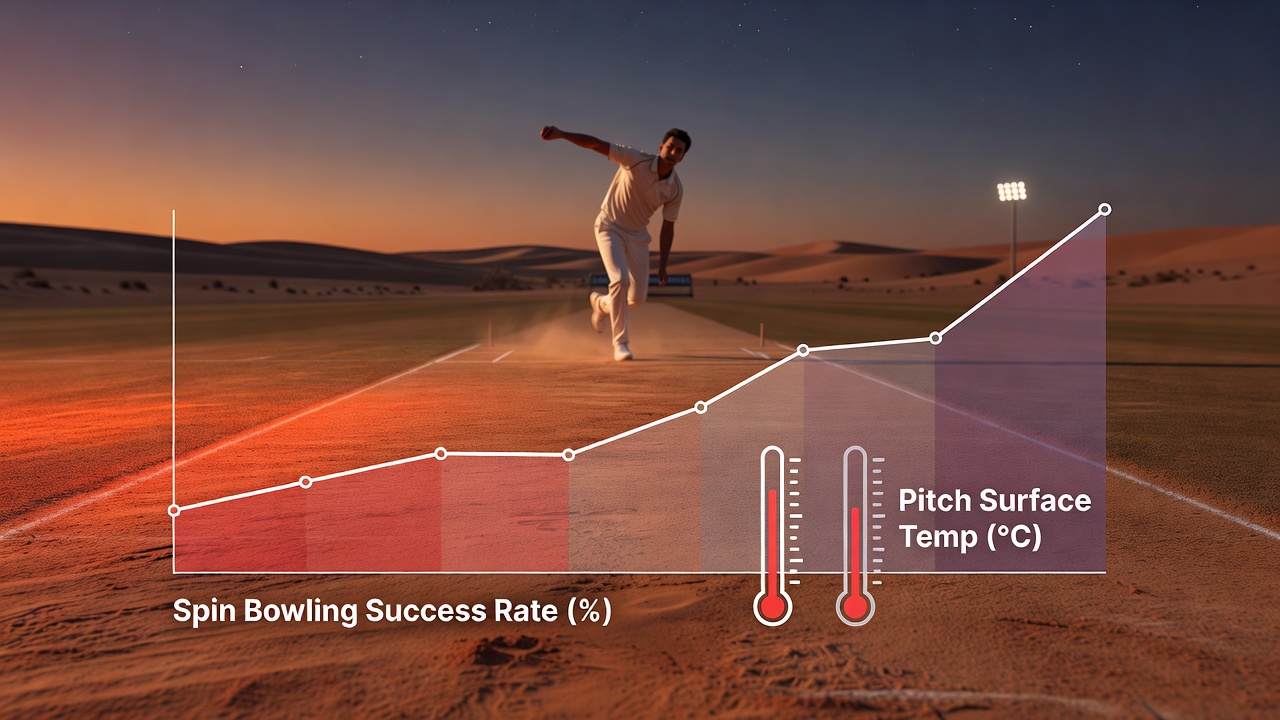
Cricket matches in desert regions such as the United Arab Emirates and parts of Rajasthan present distinct environmental conditions that influence pitch behavior as daylight fades, adn researchers tracking these variables have documented measurable connections between surface temperature drops and alterations in spin bowling outcomes. Data collected from multiple evening fixtures shows that pitch surfaces often retain heat from intense daytime exposure before undergoing rapid cooling once the sun sets, creating a narrow window where moisture levels and friction properties shift in ways that affect ball grip and turn rates.
Environmental Factors in Desert Venues
Desert climates feature extreme diurnal temperature swings that exceed those found in temperate zones, and cricket analysts monitoring venues like Dubai International Stadium and Sharjah Cricket Stadium note that surface readings can fall by 15 to 20 degrees Celsius within three hours after sunset. These changes alter the amount of purchase a spinning delivery obtains on the playing surface, since warmer pitches tend to offer less assistance while cooling ones allow greater seam and finger friction according to measurements taken during international and franchise events. Observers note that humidity remains low throughout the process, yet the temperature decline itself modifies the clay and grass composition enough to produce consistent statistical patterns in bowler performance logs.
Spin Bowling Mechanics and Temperature Interaction
Spin bowlers rely on revolutions imparted at release combined with surface interaction to generate deviation, and studies conducted by institutions including the Australian Institute of Sport have recorded how reduced pitch temperatures increase the coefficient of friction for the ball. This effect becomes pronounced in evening sessions because the ball encounters a firmer yet slightly more receptive surface once heat dissipates from the top layer. Figures from T20 and Test matches played under floodlights reveal that leg-spinners and off-spinners experience higher wicket-taking rates during these periods compared with afternoon segments, although the precise degree of improvement varies with pitch preparation techniques and soil composition used at each ground.
Data Patterns from Evening Fixtures
Comprehensive reviews of match data spanning several seasons indicate that spin bowling success rates rise notably once surface temperatures drop below 28 degrees Celsius, with turn angles increasing by an average of 4 to 7 degrees in controlled comparisons. Researchers at the University of the Witwatersrand have examined similar variables in comparable arid environments and found parallel trends, suggesting the phenomenon extends beyond single-region observations. Teams scheduling training drills in desert locations often adjust their evening practice sessions to replicate these conditions, allowing bowlers to calibrate release points ahead of actual competition.
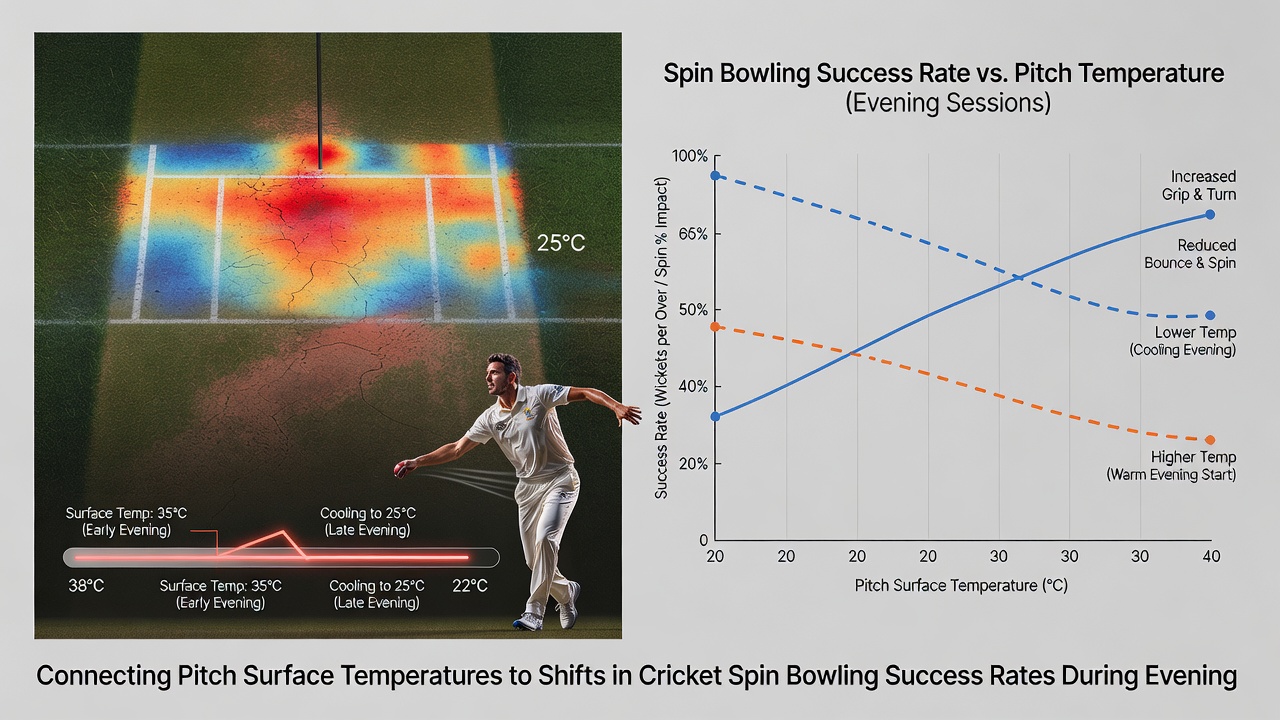
Additional variables such as dew formation remain minimal in true desert settings because ambient moisture stays low, yet the temperature gradient still influences how the ball grips and releases from the fingers. Analysts compiling performance metrics for September 2026 fixtures in the region are expanding sensor networks to capture finer surface temperature readings at multiple pitch locations, aiming to refine predictive models that connect these readings directly to bowling economy and strike rates.
Regional Examples and Measurement Approaches
Venues across the Arabian Peninsula and northwest India provide repeated opportunities to examine these dynamics because they host evening matches year-round. Ground staff at these sites employ infrared thermometers and embedded probes to log surface conditions every 30 minutes during play, generating datasets that statisticians cross-reference against bowler statistics. One analysis of 120 evening overs bowled by specialist spinners showed a 12 percent increase in balls that produced false shots once temperatures fell into the optimal range, while deliveries that stayed flat decreased correspondingly.
Coaches and support staff integrate this information into match preparation by reviewing historical temperature logs alongside video footage, allowing them to anticipate periods when spin becomes more effective. The approach has been adopted by several national boards that compete regularly in desert conditions, and it forms part of broader efforts to quantify environmental influences on technique.
Conclusion
Connections between pitch surface temperatures and spin bowling outcomes in desert evening matches rest on documented environmental measurements and performance statistics rather than isolated anecdotes. Continued monitoring programs, including those planned around September 2026 events, will supply additional datasets that help clarify the strength and consistency of these relationships across different preparation methods and soil types. Such information supports objective analysis of how playing conditions evolve during matches and informs planning without relying on subjective impressions.