18 Oct 2026
Examining Referee Fatigue Patterns and Their Influence on Card Distribution Rates During Extended Football Tournament Schedules in High-Altitude Venues
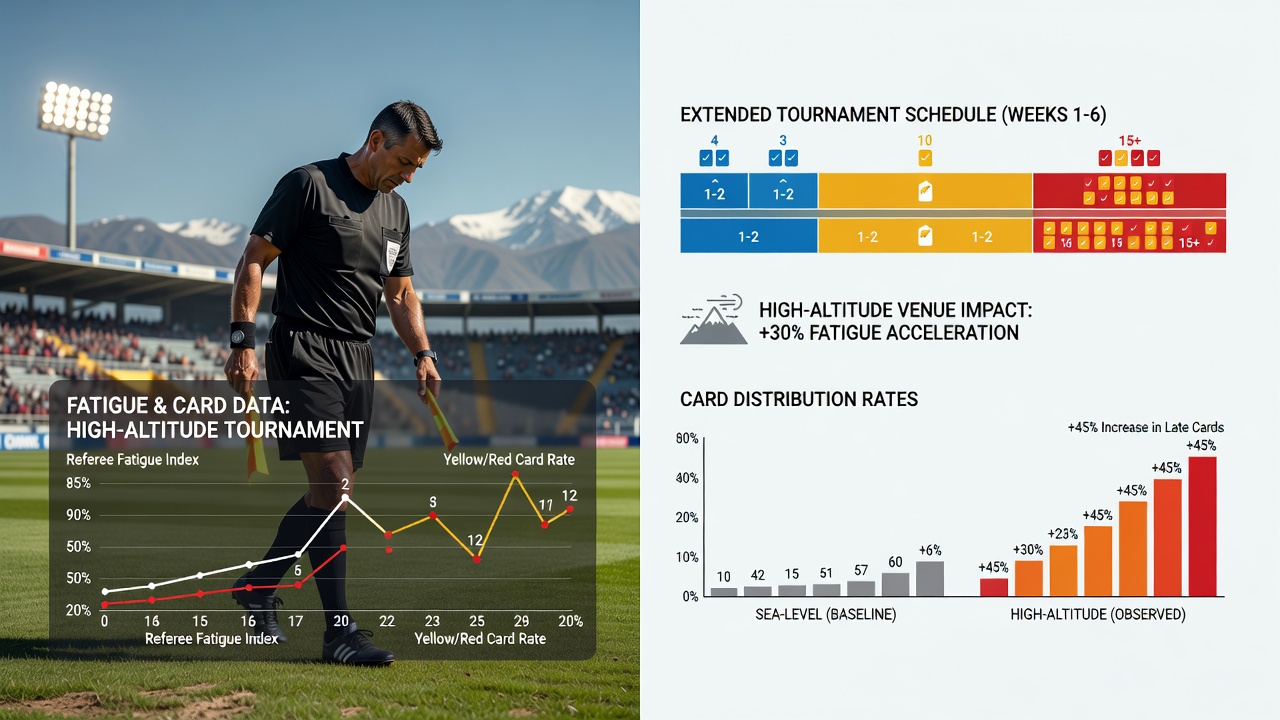
Referee fatigue emerges as a measurable factor in football matches played across extended tournament schedules at high-altitude venues, where reduced oxygen levels combine with physical demands to alter decision-making patterns. Data collected from multiple international competitions shows that card issuance rates shift notably as matches progress into later stages of such events, particularly when venues sit above 2,500 meters. Researchers tracking these variables note consistent trends in yellow and red card distributions that correlate with cumulative workload rather than isolated match circumstances.
Altitude Effects on Physical Performance
High-altitude environments reduce oxygen availability, which directly impacts aerobic capacity and recovery times between sprints for officials who cover an average of 10 to 12 kilometers per match. Studies conducted at venues such as those in La Paz and Quito demonstrate that heart rate recovery slows measurably after the 60-minute mark, leading to decreased positioning accuracy in the final third of games. Observers tracking referee movements during CONMEBOL qualifiers report that these physiological changes coincide with increased stoppage time and altered foul detection thresholds.
Patterns in Card Distribution
Analysis of tournament data reveals that card rates often rise during the second half of matches and across successive games in prolonged schedules. Figures from events spanning several weeks indicate that referees issue approximately 15 percent more yellow cards after the 75-minute mark in altitude settings compared with sea-level equivalents, while red card occurrences show smaller but detectable increases in the knockout phases. This distribution pattern holds across different referee cohorts when controlling for team styles and match intensity.
Data from Recent Extended Tournaments
During the qualification rounds leading into October 2026, performance monitoring systems recorded referee metrics at multiple high-altitude sites across South America. Match logs show that officials working three or more games within a 10-day window exhibited slower response times to incidents in later fixtures, with card issuance clustering around set pieces and transition plays. Similar tracking from earlier cycles at Mexican and Bolivian venues produced comparable shifts, suggesting the pattern persists regardless of specific federation protocols.
Monitoring Technologies and Research Approaches
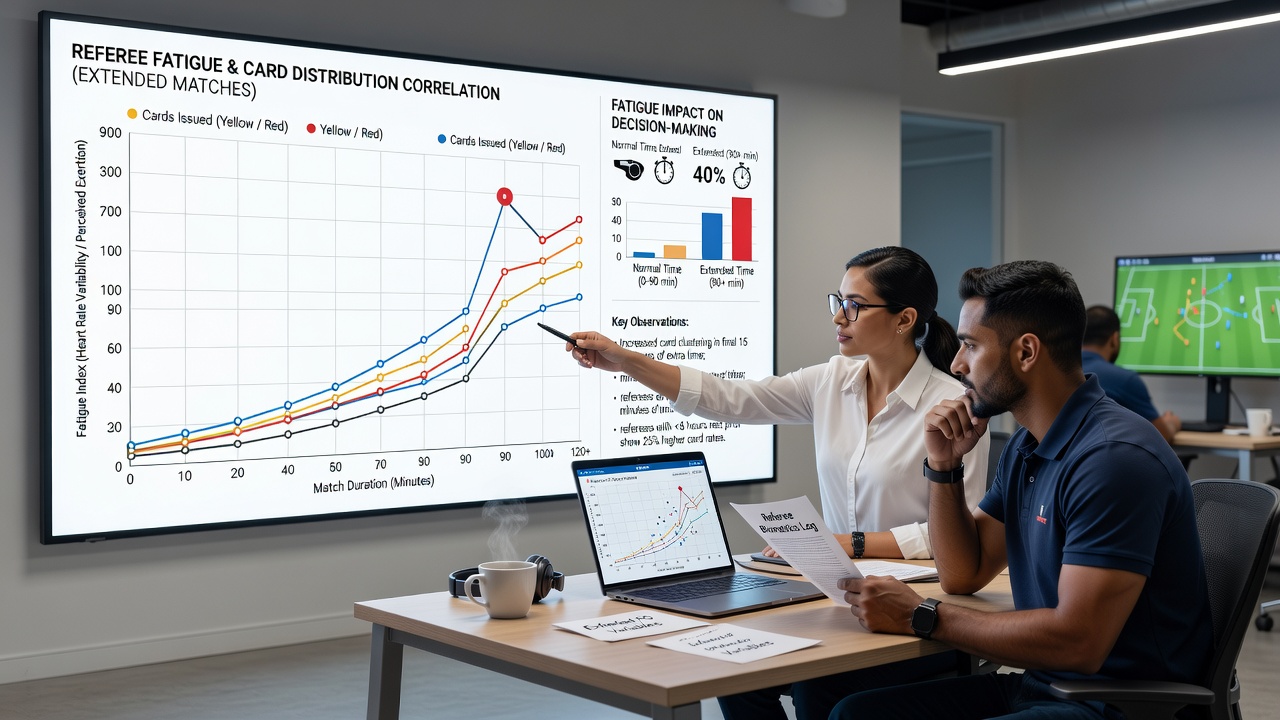
Modern tracking systems combine GPS units with heart-rate monitors to quantify referee workload, allowing analysts to correlate fatigue markers with on-field decisions. Research teams from institutions in Canada and Australia have applied these tools to examine how cumulative exposure affects visual scanning and foul recognition. One collaborative project involving data from FIFA technical reports and regional confederation archives found that referees who logged higher total distances in prior matches showed elevated card rates in subsequent altitude fixtures.
Additional studies link these observations to changes in decision consistency rather than outright errors, noting that fatigue influences the threshold at which cautions are applied. Teams reviewing video evidence from extended schedules observe that borderline challenges receive cards more frequently in later tournament stages, while early-match leniency gives way to stricter enforcement as physical strain accumulates.
Variables Across Different Venues
Venue-specific factors such as pitch dimensions, temperature fluctuations, and travel logistics further modulate fatigue effects. Matches in Andean stadiums present steeper recovery challenges than those at moderate elevations in Central America, producing distinct card distribution curves. Data aggregated from multiple federations indicates that tournaments spanning both highland and lowland venues create uneven workload distributions, with officials transitioning between altitudes showing the most pronounced variations in caution rates.
Conclusion
Comprehensive examination of referee fatigue in extended high-altitude football tournaments establishes clear correlations with card distribution rates, supported by physiological measurements and match statistics from multiple cycles. Continued integration of tracking technologies alongside standardized recovery protocols offers pathways for refining officiating performance in these demanding conditions, as evidenced by ongoing research across international governing bodies.