15 Nov 2026
Humidity's role in reshaping tennis point construction patterns and live market movements during open-air tournaments
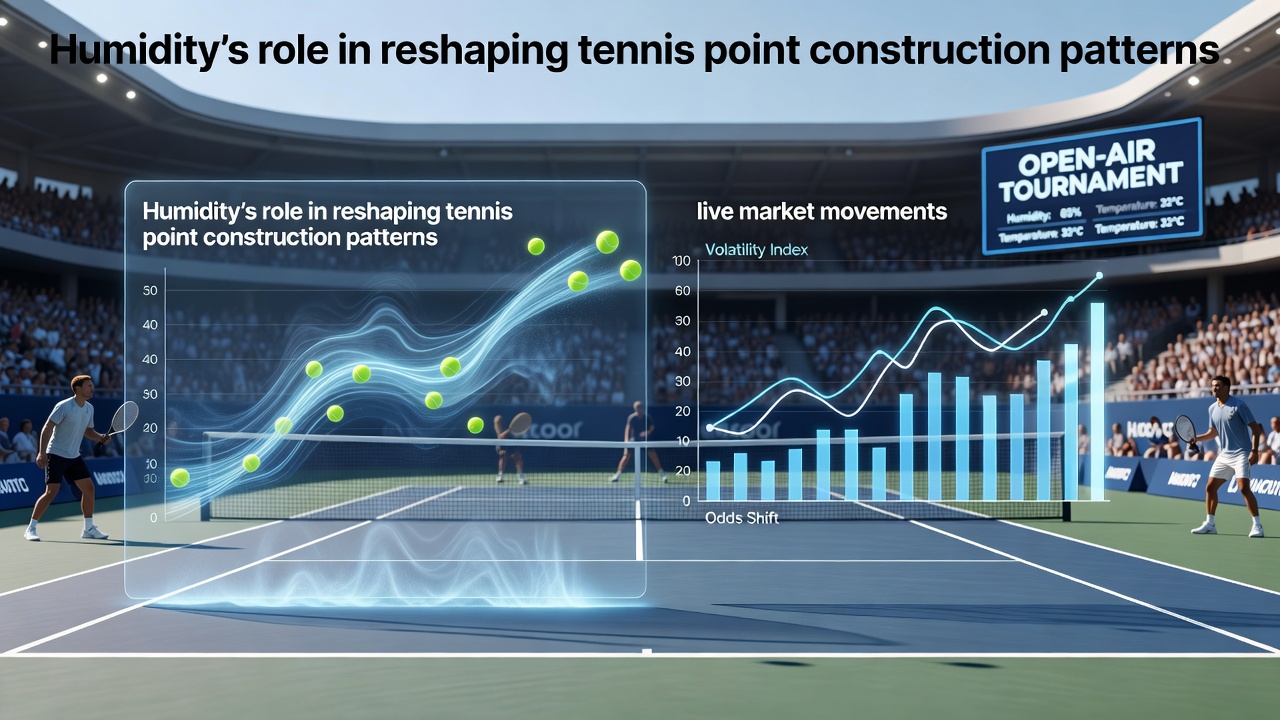
Humidity alters the density of air in ways that change how tennis balls travel through open-air environments, and data collected across multiple Grand Slam events shows measurable shifts in rally lengths and shot selection during periods of elevated moisture levels. Players adjust their point construction accordingly, moving away from short exchanges toward extended baseline sequences when the air holds more water vapor, because reduced air density allows the ball to maintain speed over longer distances while also affecting spin retention on impact with court surfaces.
Ball physics and environmental variables
Research from meteorological agencies in Australia indicates that relative humidity above 70 percent reduces air density enough to increase ball velocity by approximately 1 to 3 percent compared with drier conditions at the same temperature, and this effect compounds during afternoon sessions when ground-level moisture peaks. Observers note that serve speeds recorded at tournaments such as the Australian Open and Miami Open demonstrate consistent patterns where high humidity correlates with fewer aces and more returns staying in play, forcing servers to incorporate greater variety in placement rather than relying solely on raw pace. Those patterns extend into rally construction, where players shift emphasis toward topspin-heavy groundstrokes that exploit the altered bounce characteristics rather than attempting flat winners that lose effectiveness in moist air.
Point construction adjustments in practice
Coaches and analysts tracking professional matches have documented how humidity influences decision-making at critical moments, with returners extending rallies by 15 to 25 percent on average during high-moisture sets according to figures compiled by performance tracking platforms. One study examining outdoor hard-court events found that players increased their use of defensive slices and angled cross-court shots when humidity rose above 65 percent, because the ball slowed more noticeably after the first bounce and created opportunities to redirect pace. These tactical changes appear most pronounced in later rounds of multi-day tournaments, where cumulative fatigue interacts with environmental factors to lengthen points further and reward endurance over explosive power.
Live market responses during open-air events
Betting operators adjust in-play odds rapidly when humidity data updates coincide with observable changes in rally duration, and records from European and North American sports data providers show that point-over totals often move within minutes of weather station readings indicating rising moisture. Markets tied to individual player performance metrics, such as total points won on serve or break-point conversion rates, register corresponding fluctuations because extended rallies favor those with superior fitness profiles rather than pure serving strength. Analysts at institutions like the University of Queensland have linked these shifts to broader outcome probabilities, noting that sets played under sustained humidity above 75 percent exhibit higher rates of breaks of serve compared with equivalent matches in drier conditions.
Regional tournament examples and data trends
Events held in subtropical climates, including those scheduled through late-year calendars, provide repeated opportunities to observe these interactions, and patterns emerging from matches contested in November 2026 continue to align with historical datasets from prior seasons. Surface temperature combined with humidity produces distinct effects on clay courts versus hard courts, with clay absorbing moisture more readily and thereby extending point lengths even further through slower ball response. Data aggregators covering ATP and WTA tours report that live wager adjustments occur at higher frequencies during these periods, particularly around game totals and set margins, as bettors incorporate real-time environmental readings into their assessments of player adaptation rates.
Measurement tools and predictive modeling
Modern tracking systems integrate humidity sensors alongside ball-speed radars and player movement monitors, allowing for granular analysis that feeds directly into market pricing algorithms used by international betting platforms. Government weather services in Canada and the European Union supply standardized humidity forecasts that tournament organizers incorporate into scheduling decisions, and these inputs help refine models predicting how point construction will evolve across different times of day. Researchers continue to refine algorithms that correlate specific humidity thresholds with measurable changes in winner-to-error ratios, providing clearer baselines for understanding when markets are likely to exhibit volatility tied to environmental conditions rather than player form alone.
Conclusion
Humidity functions as a measurable variable that reshapes both the tactical elements of point construction and the responsiveness of live betting markets throughout outdoor tennis tournaments, with data from multiple regions confirming consistent directional effects on rally characteristics and outcome probabilities. Continued collection of environmental and performance metrics through upcoming events will further clarify these relationships, supporting more precise integration of weather inputs into both strategic preparation and market analysis frameworks.