21 Aug 2026
Seasonal Track Conditions and Their Impact on Long-Term Horse Racing Payout Patterns
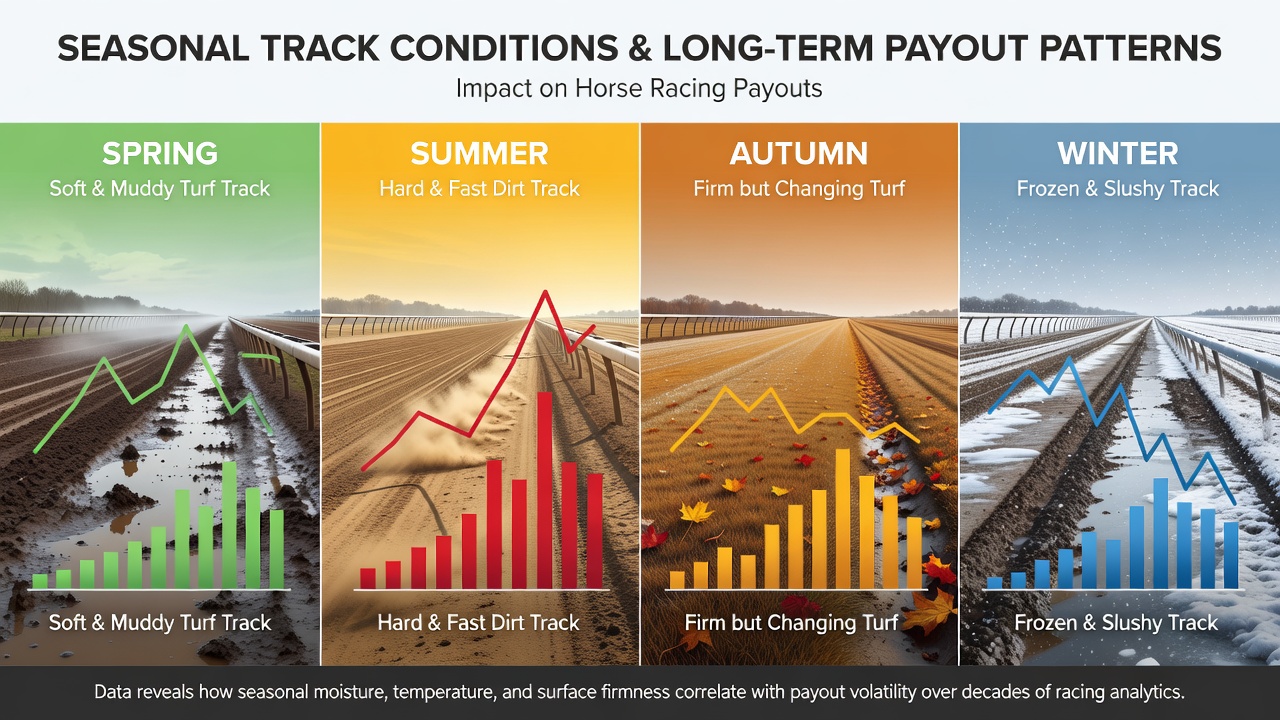
Seasonal shifts in weather reshape racetrack surfaces across dirt, turf, and synthetic materials, which in turn alters horse performance metrics and influences payout distributions in pari-mutuel betting systems over extended periods. Data collected from multiple racing jurisdictions shows that spring moisture levels often create softer going that rewards stamina-oriented runners, while summer firmness tends to favor early speed, and these patterns compound into measurable changes in win rates for favorites versus longshots when tracked across decades.
Track Surface Variations Across Seasons
Winter precipitation typically increases moisture content in dirt tracks, raising the likelihood of sealed surfaces that slow overall times by 2 to 4 seconds per mile according to historical clocking records maintained by industry bodies. Spring rains further saturate turf courses, producing holding ground where closers gain an edge, whereas autumn drying cycles produce firmer rails that reward front-runners, and these cyclical changes repeat annually with measurable consistency in regions monitored by the Canadian Pari-Mutuel Agency.
Researchers compiling multi-year datasets have noted that synthetic tracks installed in the early 2000s exhibit less seasonal drift than traditional dirt, yet even these surfaces display minor variations tied to temperature swings that affect cushion depth and rebound characteristics during the transition from July heat to November cooling.
Performance Data and Seasonal Horse Types
Stallions and mares with proven records on yielding turf post higher strike rates during April through June in northern hemisphere circuits, while speed-bred juveniles dominate July and August programs when tracks reach their hardest annual state. Observers tracking thousands of races have documented that horses returning from winter layoffs often require one start to acclimate to changing conditions, which creates temporary inefficiencies reflected in inflated morning-line odds that later correct in subsequent outings.
Long-term studies of Thoroughbred populations reveal that certain bloodlines maintain consistent seasonal advantages, and breeding programs have adjusted selection criteria accordingly since the 1990s when computerized past-performance databases first enabled granular analysis of track-variant correlations.
Long-Term Payout Pattern Shifts
Betting pools respond to these performance shifts because public handicappers adjust selections based on visible track conditions, which gradually alters the distribution of money across win, place, and show pools as well as exotic wagers. When soft-ground specialists become public choices during wet months, the resulting payouts for those runners compress while underbet speed horses in the same fields generate higher returns on firm days later in the season.
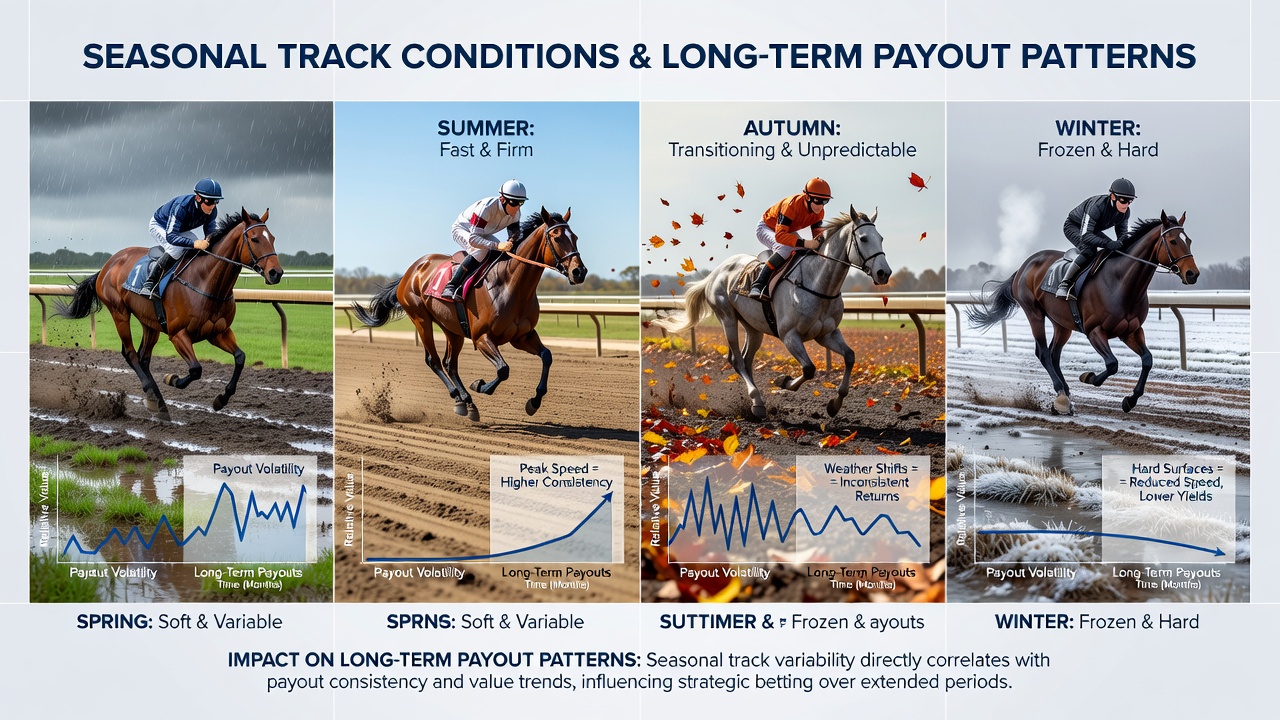
Analysis of payout trends spanning 1995 through 2025 indicates that the average payoff for favorites drops by approximately 8 percent during peak summer months compared with spring, while longshot payouts rise correspondingly because bettors overcorrect for perceived speed biases. As preparations for the 2026 fall racing season begin in August, track superintendents typically begin aeration programs that restore cushion and moderate these effects, yet residual patterns from earlier months continue to influence late-year results.
Regional and Regulatory Context
European Pattern races scheduled on turf experience more pronounced seasonal swings because irrigation practices vary by country, and data compiled by the European Pattern Committee shows that Irish and French courses maintain softer profiles longer into summer than their British counterparts. In Australia, where Racing Australia oversees nationwide reporting, summer racing in southern states often moves to synthetic surfaces to counteract extreme heat and dryness that would otherwise create unsafe footing.
North American tracks managed under state racing commissions apply different maintenance protocols, yet aggregate figures released by the Jockey Club demonstrate that seasonal condition changes still produce statistically significant deviations in favorite win percentages when measured over ten-year rolling periods.
Conclusion
Seasonal track conditions create recurring performance differentials that accumulate into distinct long-term payout patterns across horse racing jurisdictions. Continuous monitoring of surface data combined with historical performance records allows observers to quantify these effects, and the patterns persist regardless of advances in track maintenance technology or changes in the racing calendar.